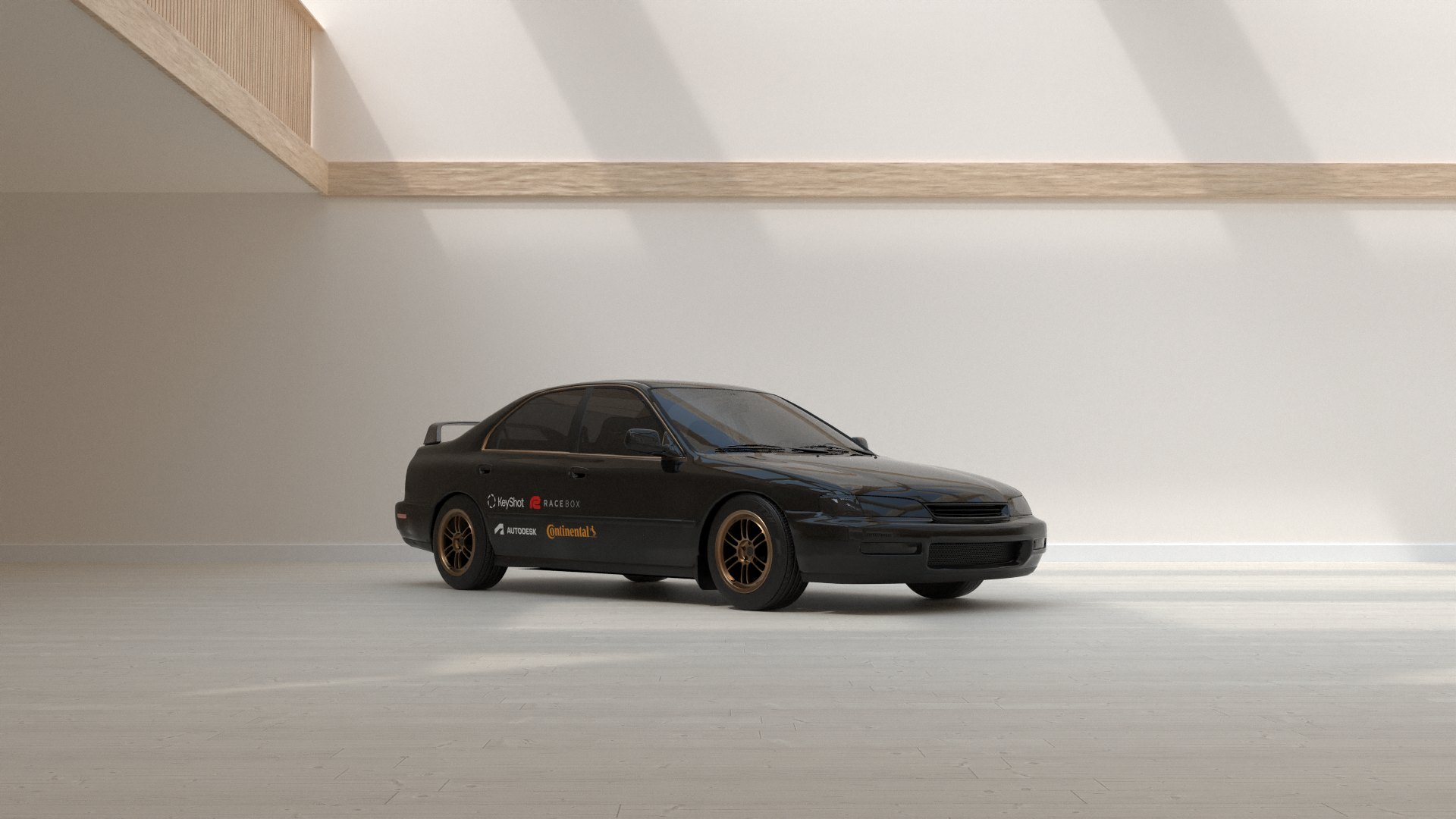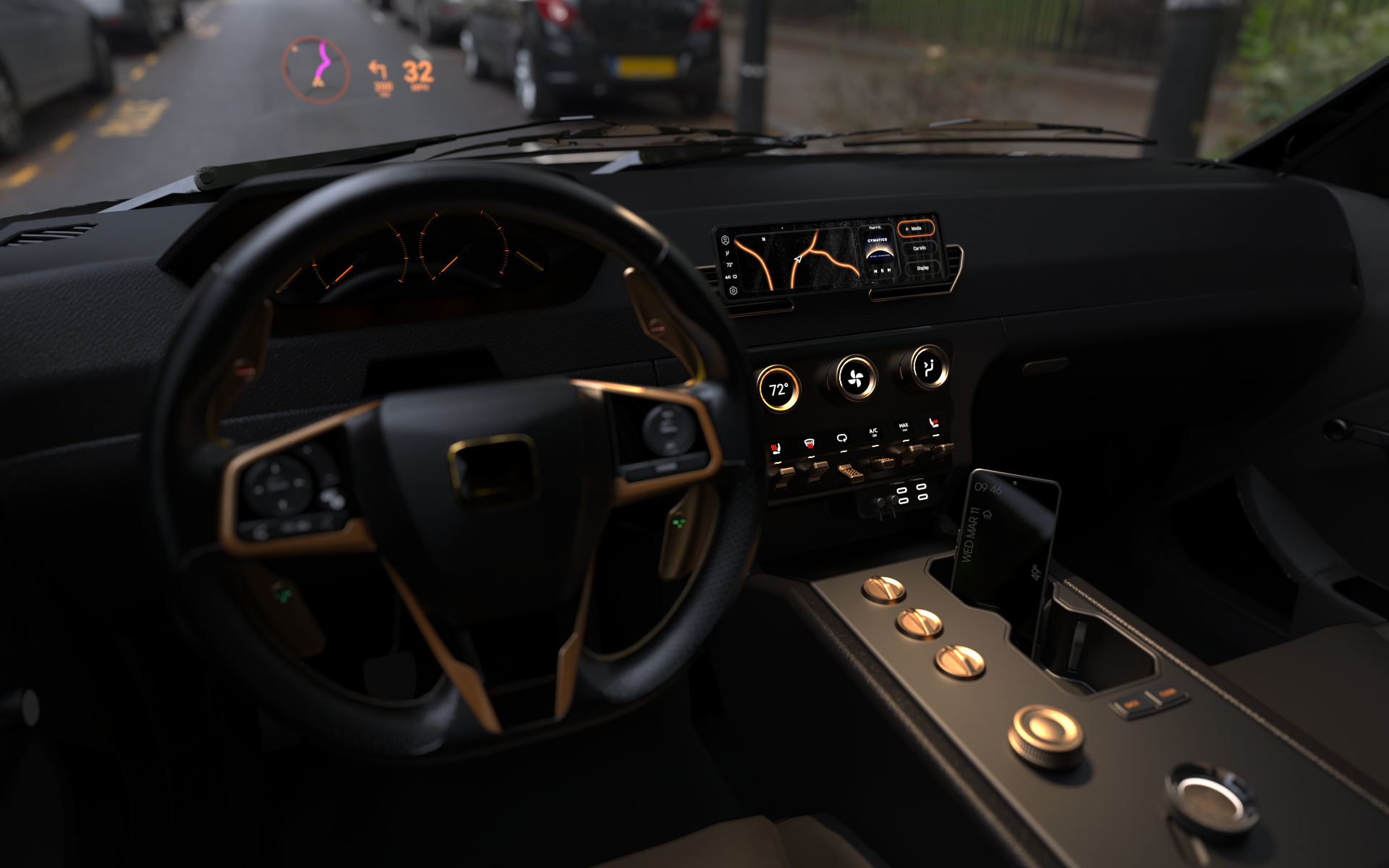

Built on the concepts of dynamic mapping of tactile switches from older vehicles and aircraft cockpits, and combining it with the newest technology in EV platforms.
Project Shiden (紫電)
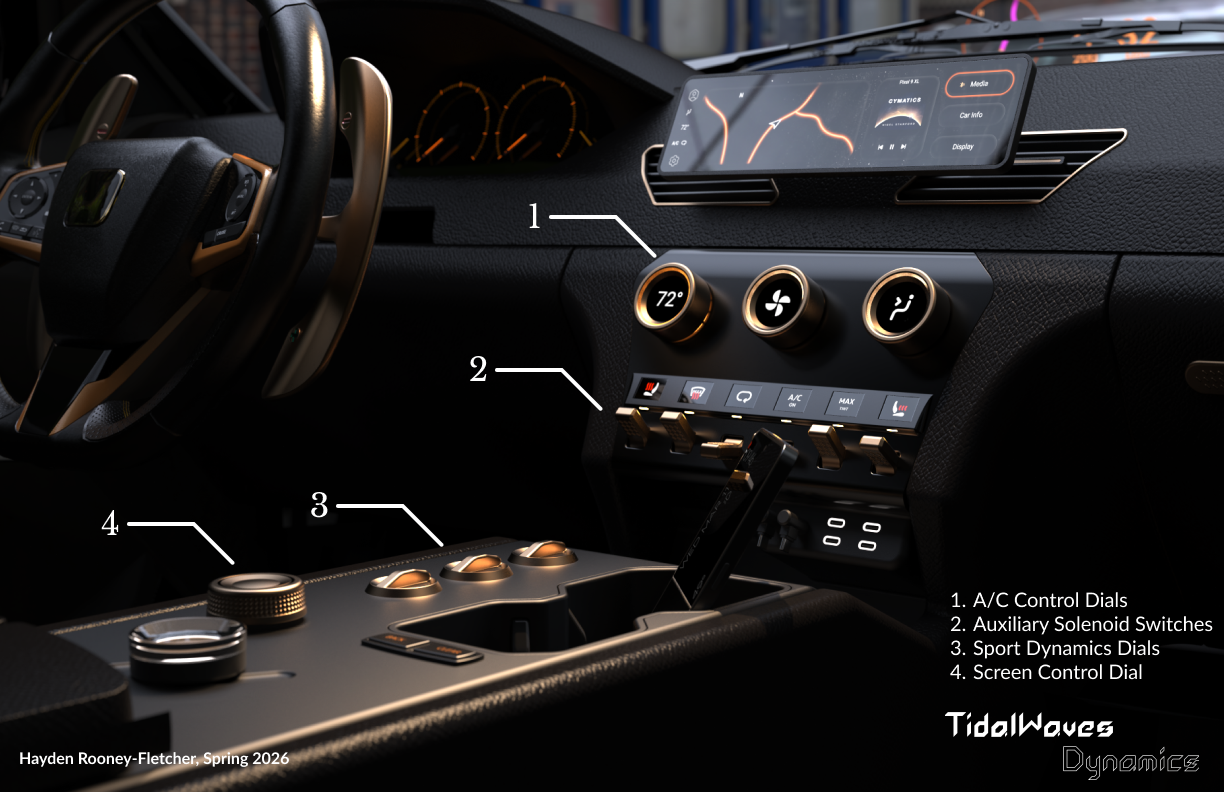
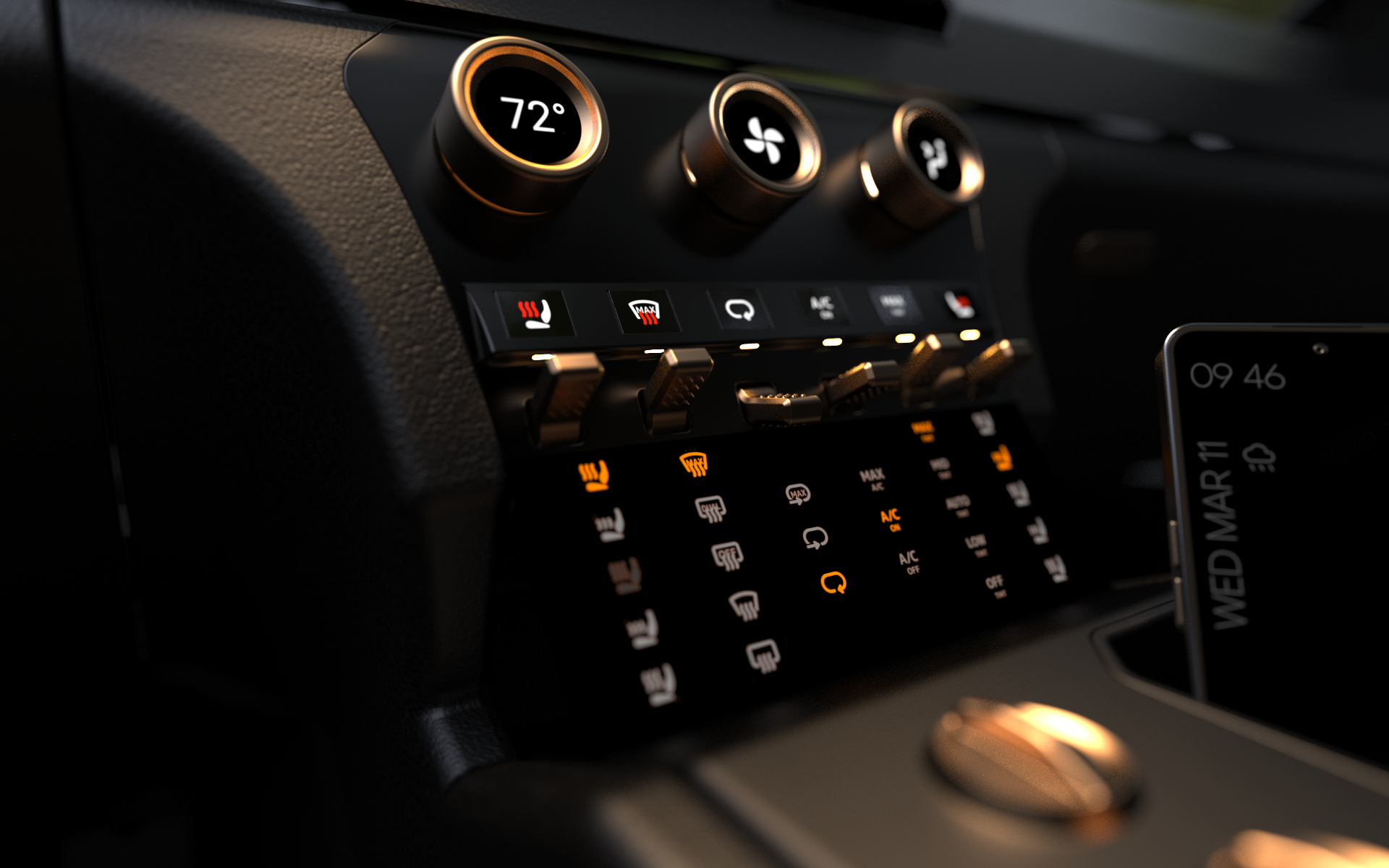
This is the interior redesign portion of the project, focused on reincorporating physical switches and intuitive placement to maintain rapid useability and control at a glance. The primary use is for more enthusiastic, near-limit driving while allowing muscle memory to take over any auxiliary control adjustments.
“The brain doesn't just remember where a control is, it remembers the force field (the resistance) required to actuate it.
This is called dynamic mapping.
If two switches feel the same, the brain can mix up their locations. If they have different weights, the brain ‘tags’ the location with a specific effort cost, making it harder to accidentally trigger the wrong one.”
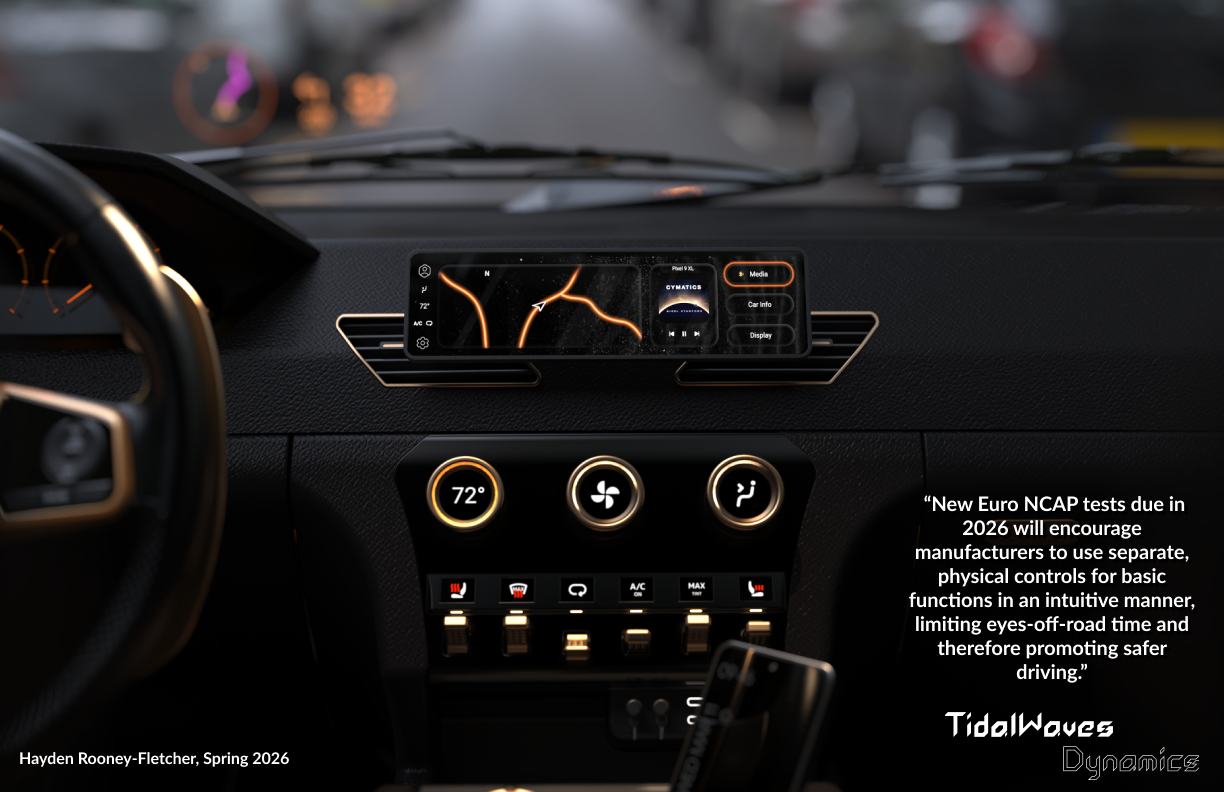
The recent focus on completely screen based controls with the giant touch screen integrated have caused widespread concern for safety and ease of driver control, especially when it comes to the issue of driver distraction and time with their eyes off the road.
The return to horizon-line positioned touchless displays with screen controls positioned by the resting position of the driver’s hand was the focus of this design.
The project has continued beyond this interior redesign to lay the groundwork for the launch under TidalWaves Dynamics, and was built to be an EV prototype technology testing bed for multiple cutting edge companies, showcased around the world.
Custom ‘solenoid switches’ were designed to be self actuating toggle switches, allowing for automation and vehicle controlled positioning while maintaining driver ability to both override the position and feel very clearly what setting they are positioned to.